| 姜谷粉丝 | 2026-05-10 08:22 |

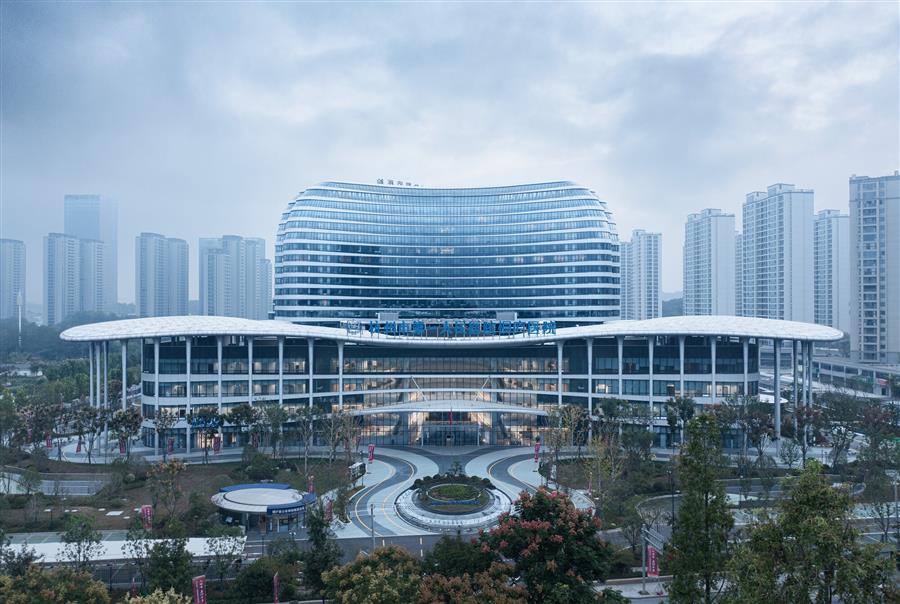 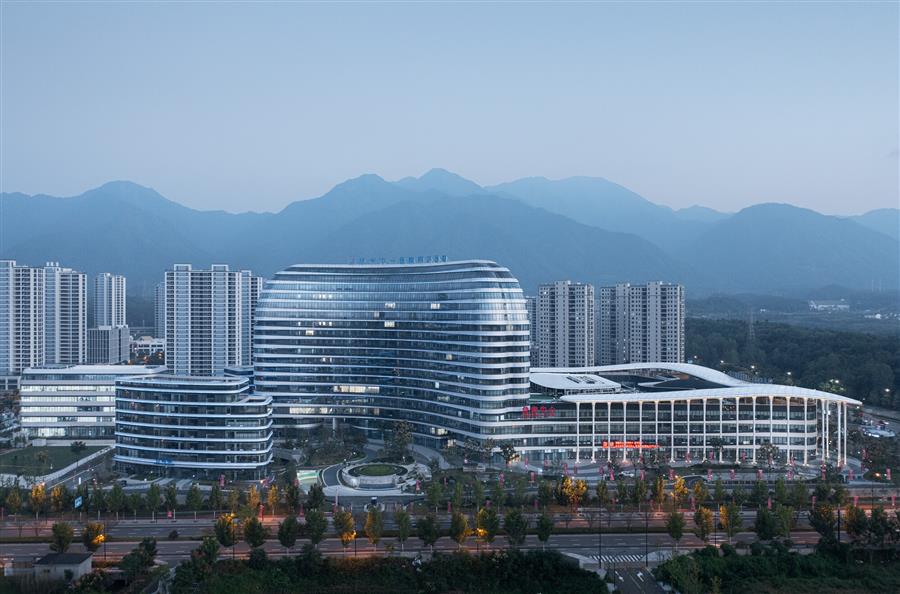 杭州市第一人民医院桐庐医院位于桐庐高铁未来城区块内,毗邻杭黄高铁桐庐站,以桐庐“富春山居”的气质为背景,建设全钢结构、绿色三星的综合性三甲医院。项目总用地面积约7万平方米,总建筑面积约20.2万平方米,其中地上约13.9万平方米,地下约6.3万平方米,总床位数1100床。 Hangzhou First People's Hospital Tonglu Branch is situated in the High-speed Rail Future City of Tonglu County. It is adjacent to the Tonglu Station of the Hangzhou-Huangshan High-Speed Railway, with the painting "Dwelling in the Fuchun Mountains" in Tonglu County as the backdrop. The hospital, featuring an all-steel structure, is designed as a comprehensive Grade-A tertiary hospital certified as a Three-star Green Building. The project covers an area of 70,000 m2. The total construction area is about 202,000 m2, with 139,000 m2 above ground and 63,000 m2 underground, and a total number of 1,100 beds. 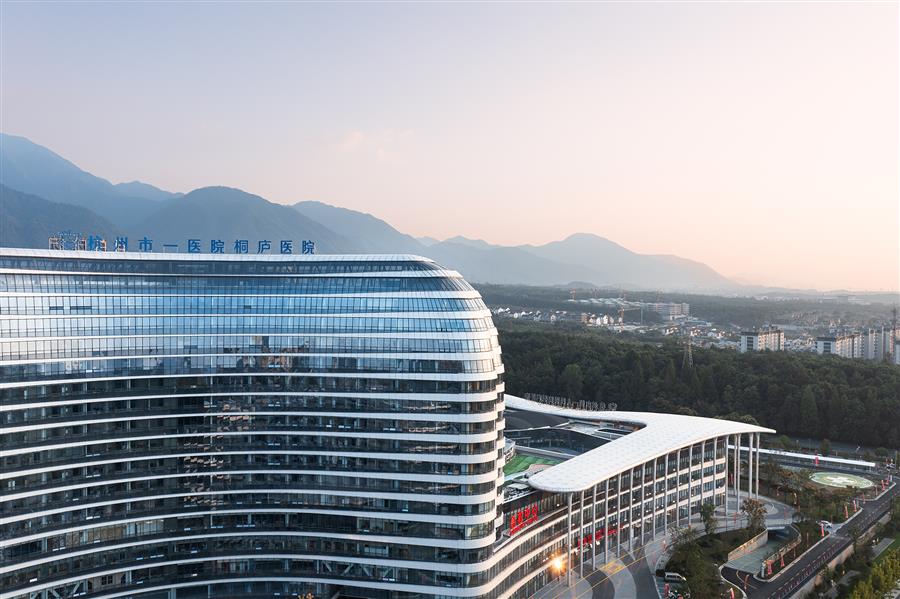 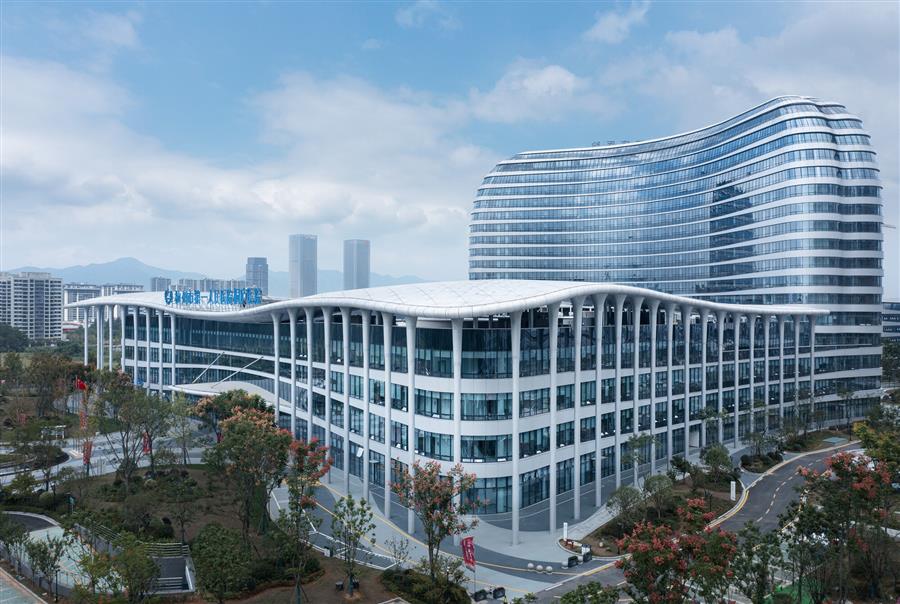 绿叶草,融合自然的未来城市——桐庐医院的迁建设计,始于2019年全球新冠疫情之前。为缓解省级三甲医院的诊疗压力,同时提升县级医院的医疗服务水平,桐庐将人民医院新院区选址于高铁未来城,基地周边道路平整,不远处群山环绕,显露出桐庐“富春山居”美景的气质。而这块未来新城未开发的土地,也亟待一座空间气质相符的引领者。 Green Clover, Future City Integrated with Nature - The relocation and reconstruction design of Hangzhou First People's Hospital Tonglu Branch began prior to the outbreak of the global COVID-19 pandemic in 2019. To alleviate overcrowding in provincial Grade-A tertiary hospitals while elevating medical services at the county level, the hospital has chosen the High-speed Rail Future City for its new campus. The site features well-developed surrounding roads and is embraced by nearby mountain ranges, embodying Tonglu's natural beauty captured in the classical paining "Dwelling in the Fuchun Mountains". This undeveloped land in the emerging urban district also urgently awaits a pioneering architectural presence that aligns with its spatial character. 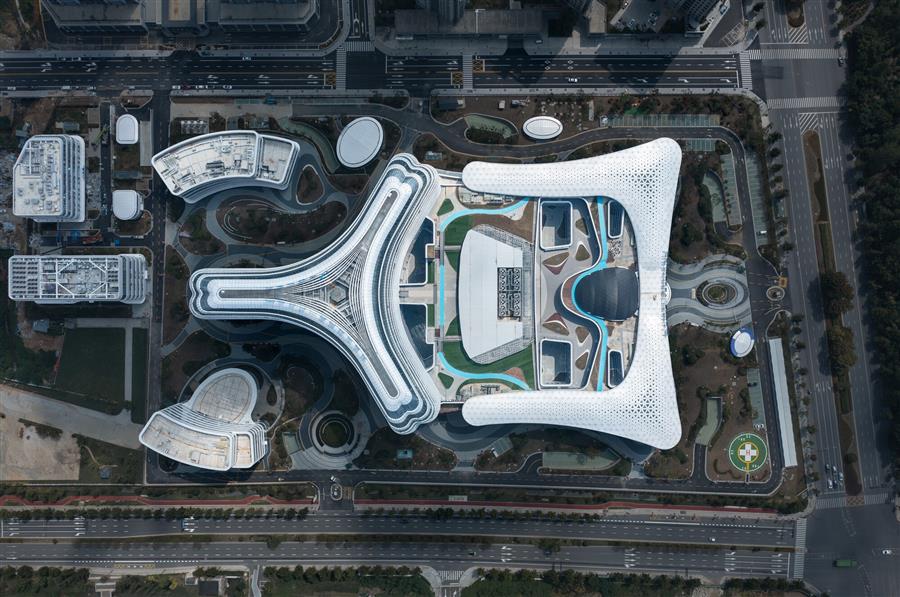 2020年,项目处于概念设计阶段。这种规模的县级医院是规模化、高密度新建医院的代表。设计以建筑的本质为基础,暂时抛开医疗流程和物流系统的复杂考虑,从狭窄和细长的矩形场地开始。由于场地不是南北朝向,而是有35度的偏差,设计首次创新地使用了“三叶草形”的护理单元:三个护理单元被安排在同一楼层,中心有一个共享的电梯大厅。这种模式不仅为所有三个护理单元提供了充足的日光和通风,而且还提高了循环核心的效率。此外,它适应未来重点部门的发展和大病房的需要,同时允许实施多学科团队(MDT)医疗实践。为了适应现有医务人员的使用习惯,同时也适应未来的发展,设计采用了贯通式医疗街的折衷方案。这条医疗街将门诊楼、医疗技术中心和住院楼三大功能区相互连接,形成一个统一的医疗综合体。 In 2020, the project was in the stage of conceptual design.A county-level hospital of this scale was representative of large-scale and high-density new hospitals. The design was based on the essence of architecture, temporarily setting aside the complex considerations of medical processes and logistics systems, and started from the narrow and elongated rectangular site. Since the site was not oriented due north-south but had a 35-degree deviation, the design innovatively used a "clover-shaped" nursing unit for the first time: three nursing units were arranged on the same floor, with a shared elevator lobby in the center. This model not only provided sufficient daylight and ventilation for all three nursing units but also improved the efficiency of the circulation core. Moreover, it accommodated future development of key departments and the needs of large wards, while allowing for the implementation of Multi-Disciplinary Team (MDT) medical practice. In order to accommodate the existing medical staff's usage habits while also adapting to future development, the design adopted a compromise solution of a through-type medical street. This medical street interconnects the three major functional zones - outpatient building, medical technology center, and inpatient building - forming a unified medical complex. 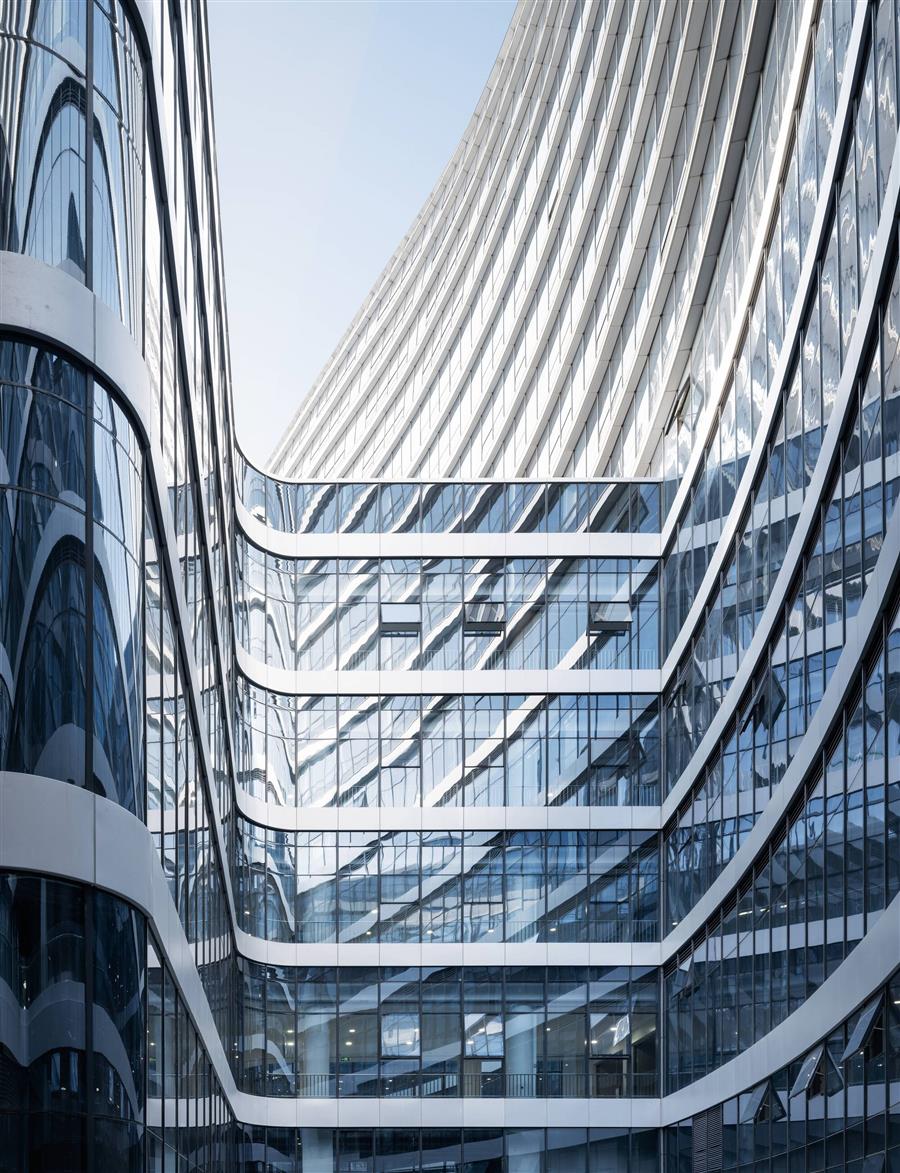 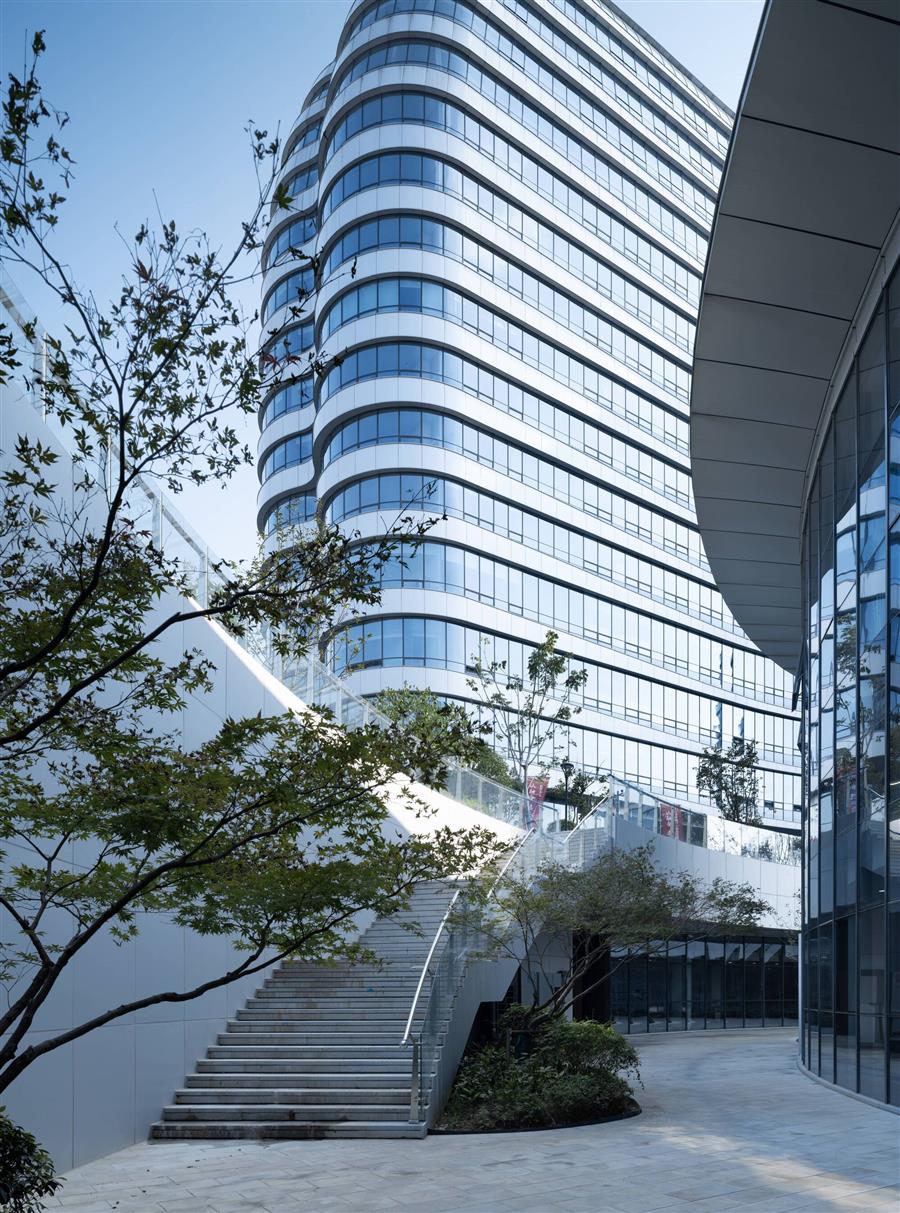 视觉上,设计从宽敞明亮的门诊大厅开始,从地板到天花板都是开放的。宽敞的无柱主医疗街连接了门诊模块和医疗技术功能,延伸到由多部电梯服务的住院电梯大堂,并连接到住院接待大厅。在实际使用中,患者可以在宽敞的医疗街内清晰地看到门诊和医疗技术功能的划分和定位,方便患者识别方向,方便患者到达目的地。叶形的综合主体建筑以微妙的曲线勾勒出其末端和天际线,延伸了“富春山居”的流动景观美学。两侧的行政大楼和传染病楼自然地拥抱着综合楼,呼应着远山的起伏。银色渐变铝板和蓝灰色玻璃的结合巧妙地呈现了过去与未来之间的对话。 Visually, the design starts with the spacious and bright outpatient hall, which is open from floor to ceiling. The spacious, column-free main medical street connects outpatient modules and medical technology functions, extends to the inpatient elevator lobby served by multiple elevators, and links to the inpatient reception hall. In actual use, patients can clearly see the division and orientation of the outpatient and medical technology functions from within the spacious medical street, allowing them to easily identify directions and conveniently reach their destinations. The leaf-shaped comprehensive main building extends the flowing landscape aesthetic of the "Dwelling in the Fuchun Mountains" with subtle curves to outline its ends and skyline. The administrative building and the infectious diseases building on both sides naturally embrace the comprehensive building, echoing the undulations of the distant mountains. The combination of silver gradient aluminum panels and blue-gray glass subtly presents a dialogue between the past and the future. 弹性设计和灵活的空间——医疗建筑的设计需要优先考虑功能,以确保诊断和治疗的效率。另一方面,医院建筑应该以服务用户为中心。它不再是冷冰冰的“治疗机”,而是面向患者、家属、医护人员和辅助人员的服务型空间。为了确保在有限的场地面积内实现最佳的医疗流程,医院员工采用同质化的模块化空间来提高功能效率,并提供适应性强的灵活空间来容纳各种服务。医院以开放、人性化设计、服务为核心,提升空间品质。 Resilient Design and Flexible Spaces - The design of medical buildings needs to prioritize functionality to ensure the efficiency of diagnosis and treatment. On the other hand, hospital architecture should focus on serving users. It should no longer be a cold "treatment machine", but rather a service-oriented space for patients, their families, medical staff, and support personnel. To ensure optimal medical processes within the limited site area, the hospital employes homogenized modular spaces for functional efficiency, and provides adaptable flexible spaces to accommodate diverse services. With openness, human-centered design, and service at its core, the hospital enhances its spatial quality. 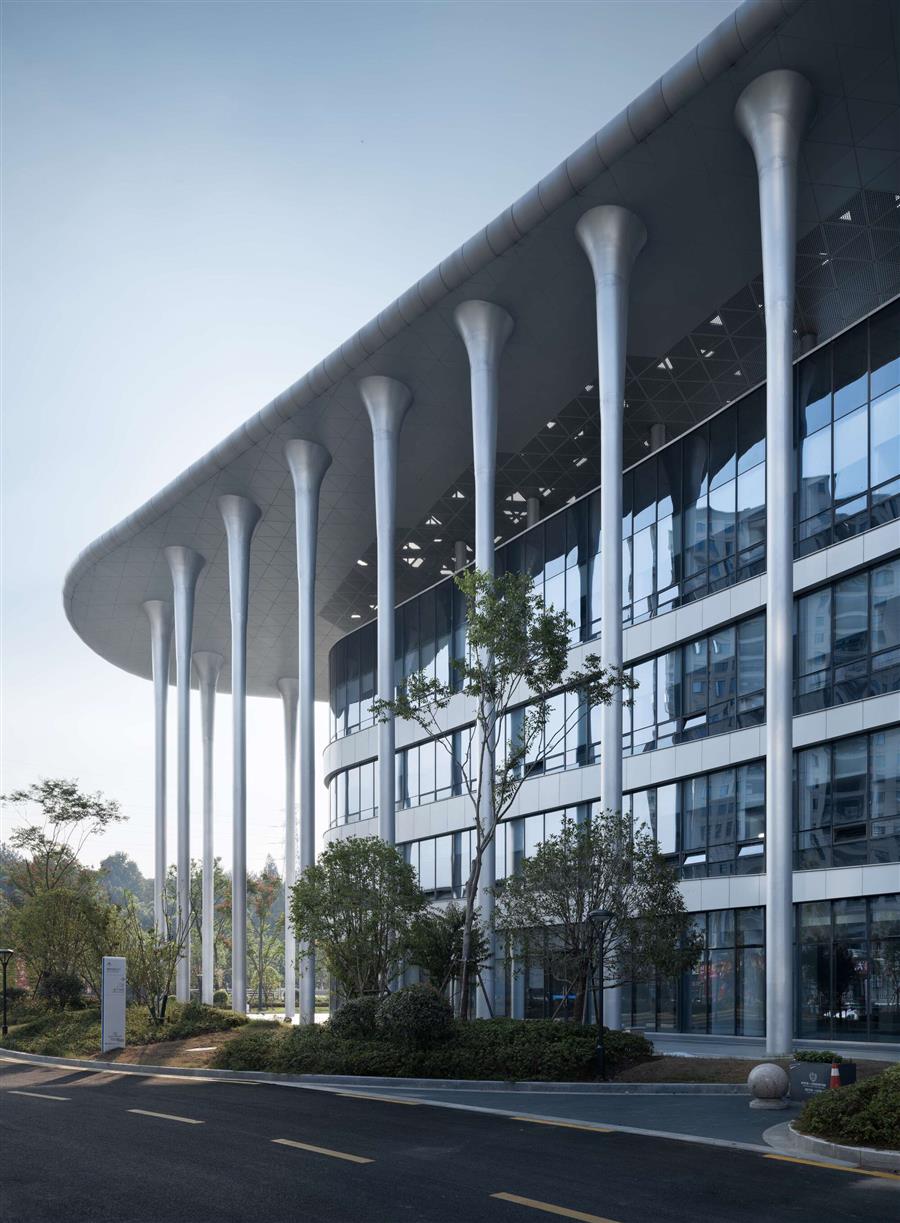 在裙楼的设计中,柱廊和悬臂屋顶也被纳入其中。有节奏的柱廊序列不仅为行人提供遮阳避雨的场所,还创造了一个过渡性的灰色空间,连接内部和外部,紧张和放松之间,为原本寒冷严峻的医院带来一丝古典美和温暖。在门诊部的设计中,采光充足的庭院被用作功能间隔,门诊部模块布置在医疗街的两侧。模块化单元提供标准化的等候区和临床空间,并根据器官特异性疾病组织功能布局。在住院楼的三个护理单元之间,三个朝向不同的阳光共享区域围绕中央循环核心布置。这些区域具有独特的建筑形式,提供充足的日光和匀称的空间。它们可以作为医务人员的休闲区,也可以作为患者家属的交流空间。 In the design of the podium, colonnades and cantilevered roofs have been additionally incorporated. The rhythmic sequence of the colonnades not only provides shelter from sun and rain for pedestrians, but also creates a transitional gray space bridging interiors and exteriors, and between tension and relaxation, bringing a touch of classical beauty and warmth to the otherwise cold and stern hospital. In the design of the outpatient department, light-filled courtyards are used as functional spacers, with outpatient modules arranged on both sides of the medical street. The modular units deliver standardized waiting zones and clinical spaces, with functional layouts organized based on organ-specific diseases. Between the three nursing units in the inpatient building, three sunlit shared areas with different orientations are arranged around the central circulation core. With unique architectural forms, these areas offer ample daylight and well-proportioned spaces. They can serve as leisure areas for medical staff or as communication spaces for patients' families. 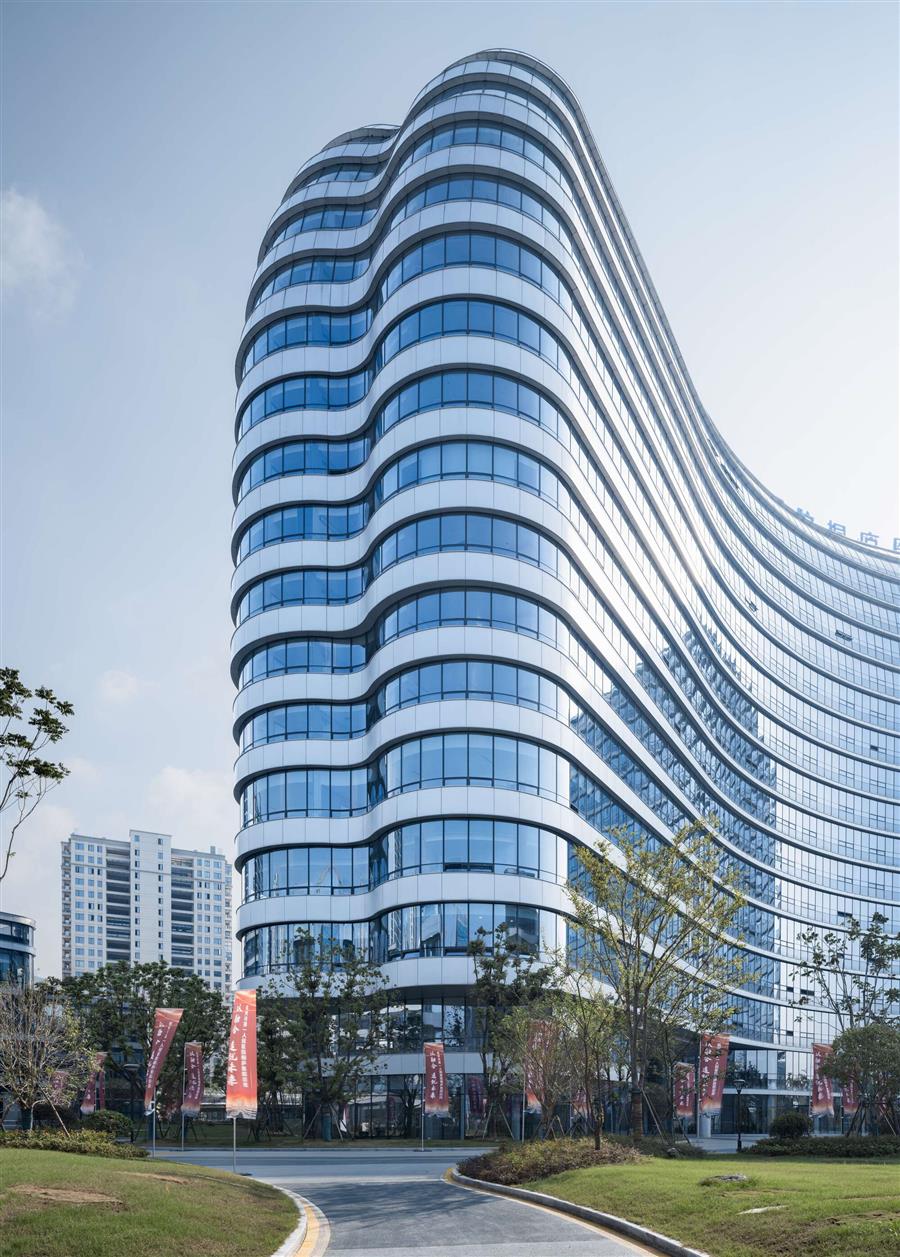 全钢结构绿色三星级医院——后疫情时代,各地医院建设如火如荼。医院建设的规模大、工期短、节奏快,也给医院的设计和施工带来了一系列问题。本工程采用全钢结构。与混凝土相比,钢材更加节能环保。钢结构建筑的模块化建造大大加快了建造过程。该项目的建成为钢结构在医院建筑中的应用提供了宝贵的经验。 Fully Steel-Structured Green Three-Star Hospital - In the post-pandemic era, hospital construction is in full swing across various regions. The large scale, short construction period and fast pace of hospital construction have also brought a series of problems to the design and construction of hospitals. An all-steel structure is adopted for the project. Compared with concrete, steel is more energy-efficient and eco-friendly. The modular construction of steel structure buildings significantly speeds up the building process. The project's completion provides valuable experience for using steel structures in hospital buildings. 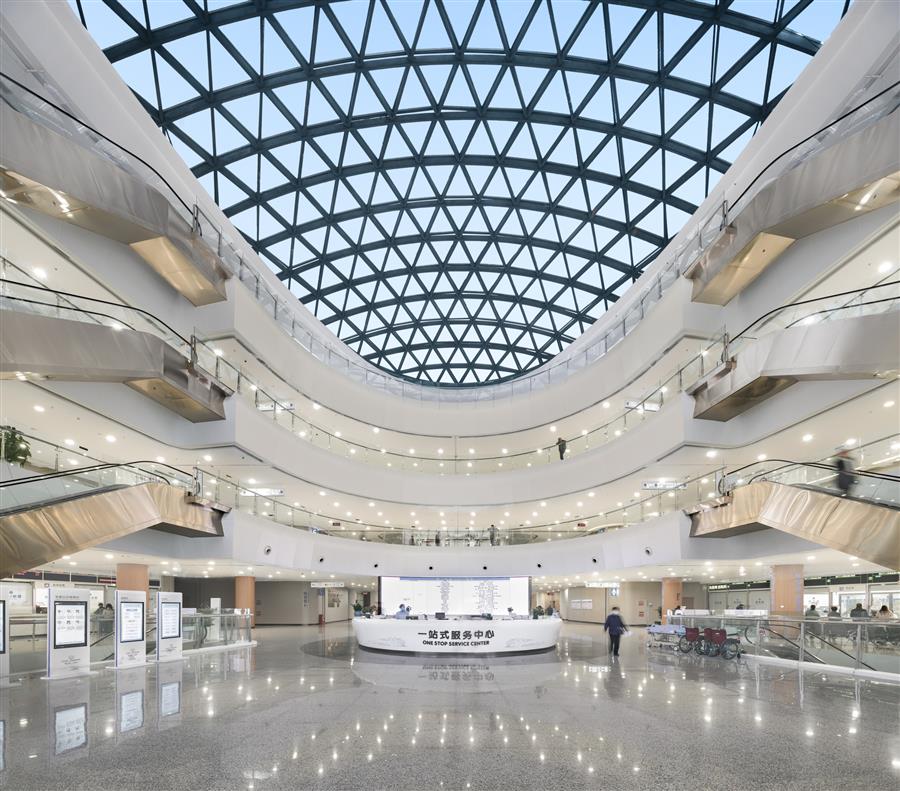 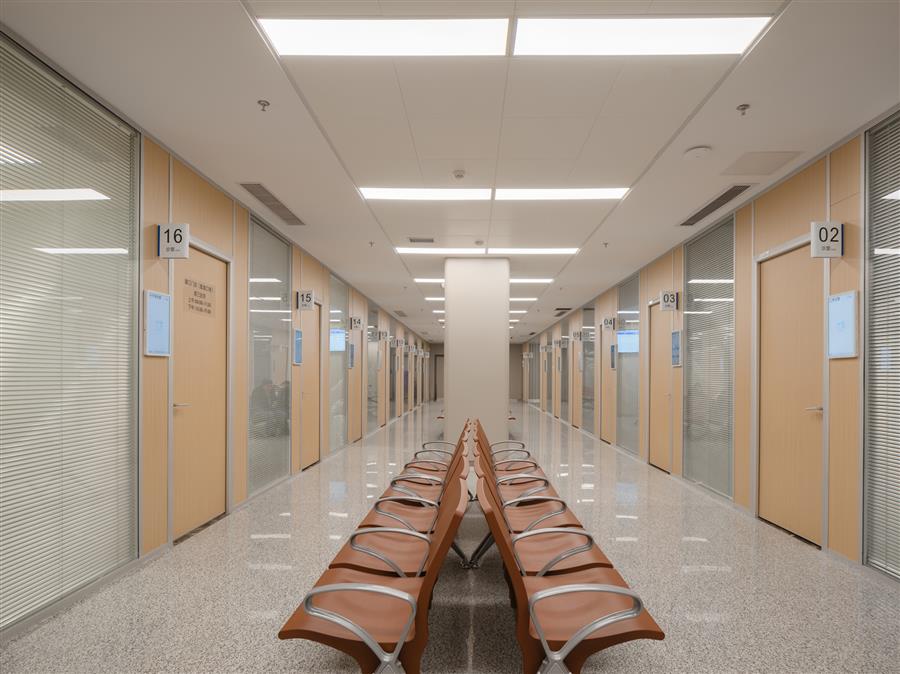 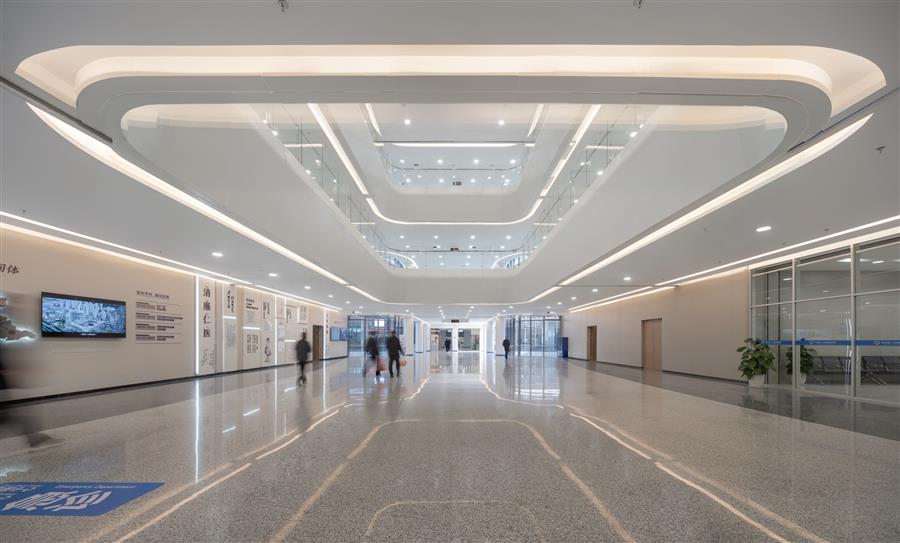 轻微的曲率和成本控制——尽管建筑的末端和天际线具有柔和的曲率,但内部功能空间采用模块化设计。为了在有限的预算内实现未来主义的外观,建筑的曲率进行了多次优化,立面线的宽度也进行了调整。这使得这座全钢结构医院得以以尽可能低的成本建成,符合中国最高的三星级绿色建筑标准。 Slight Curvature and Cost Control - Although the building features gentle curvature at its ends and skylines, modular design is employed for the internal functional spaces. To achieve a futuristic look within a limited budget, the building's curvature was optimized multiple times, and the width of the facade lines was adjusted. This allowed the creation of a full steel structure hospital – meeting China's highest Three-Star Green Building standards – at the lowest possible cost. 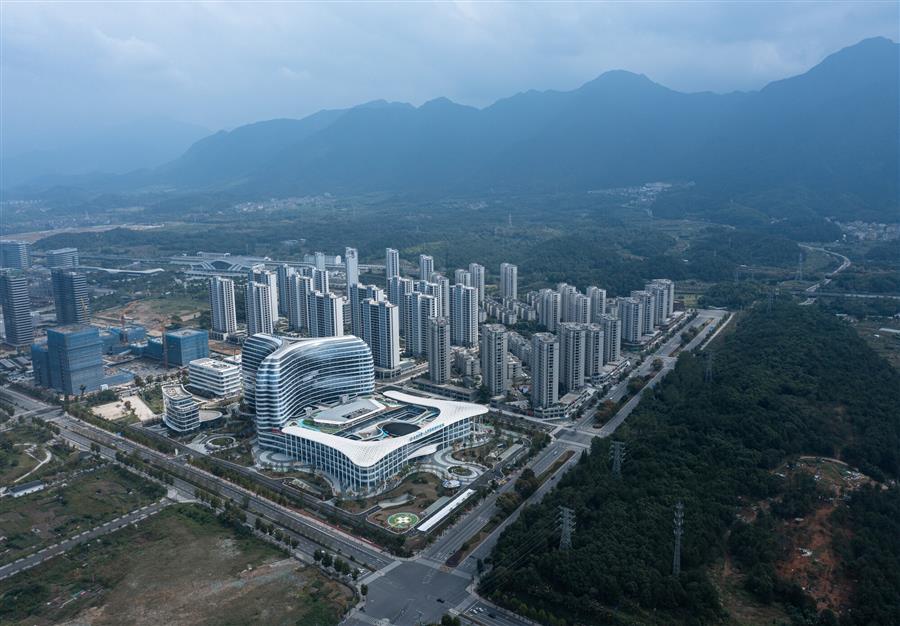 项目图纸 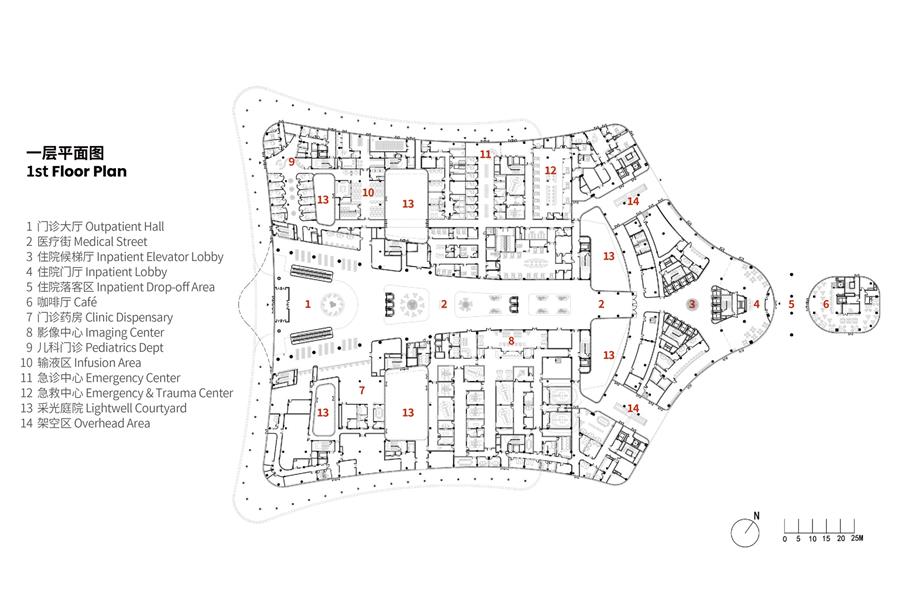 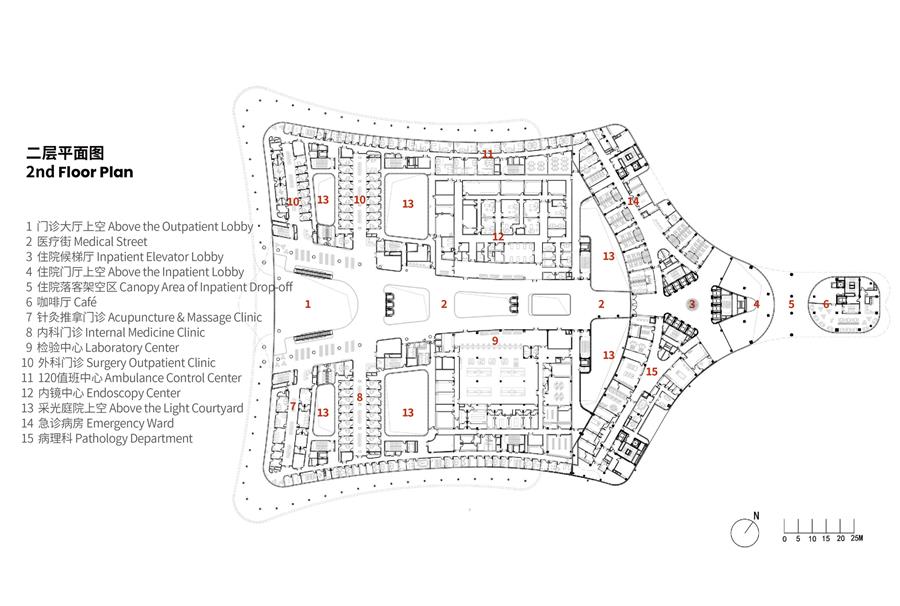 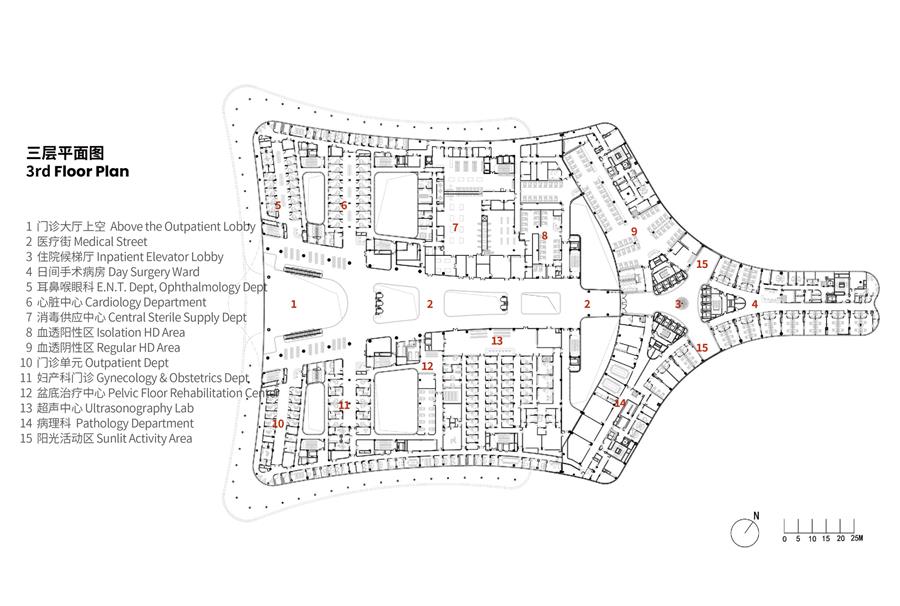 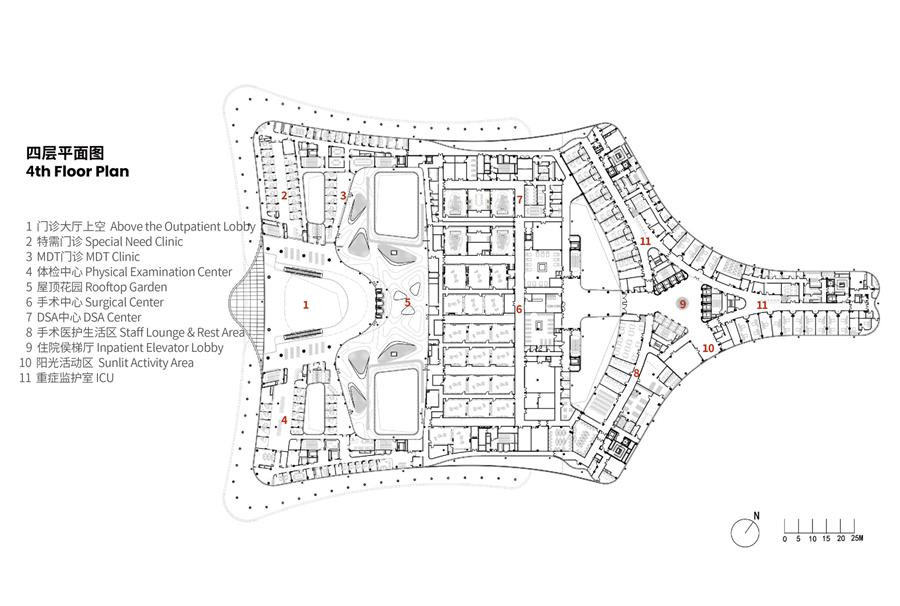 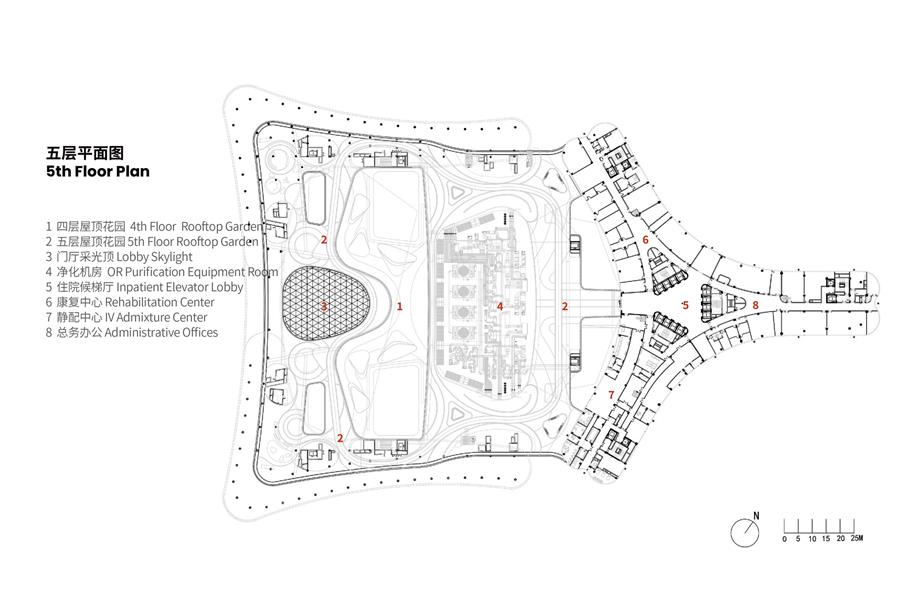 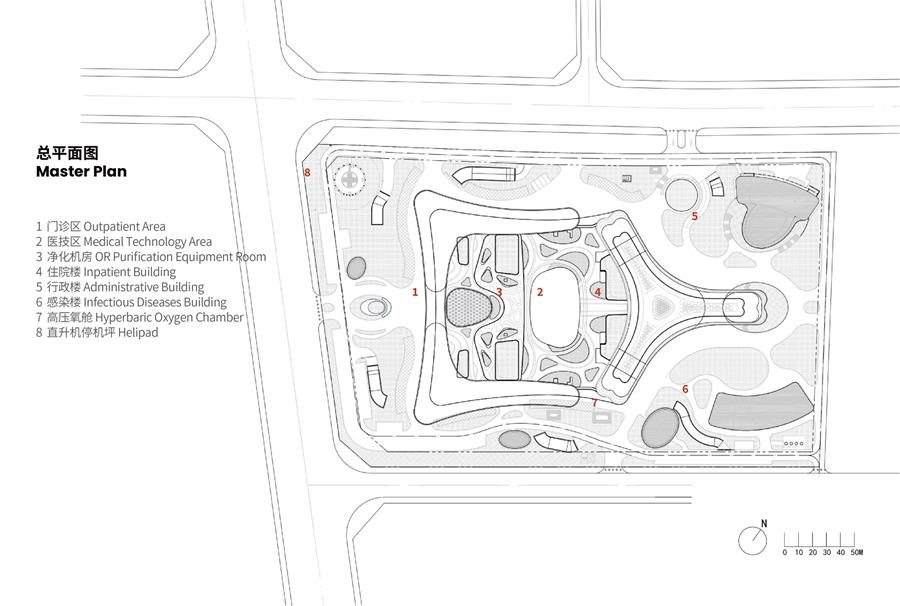 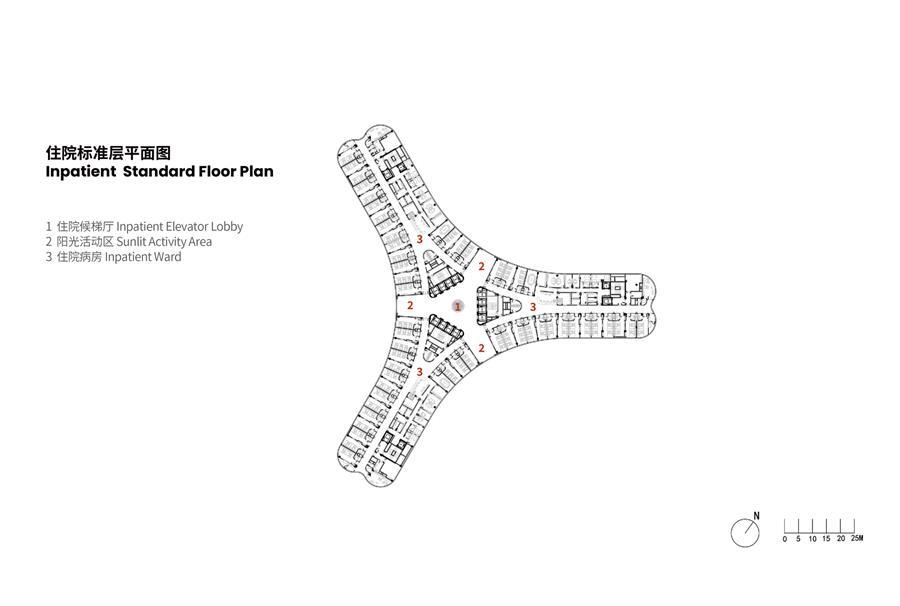 ▲平面图 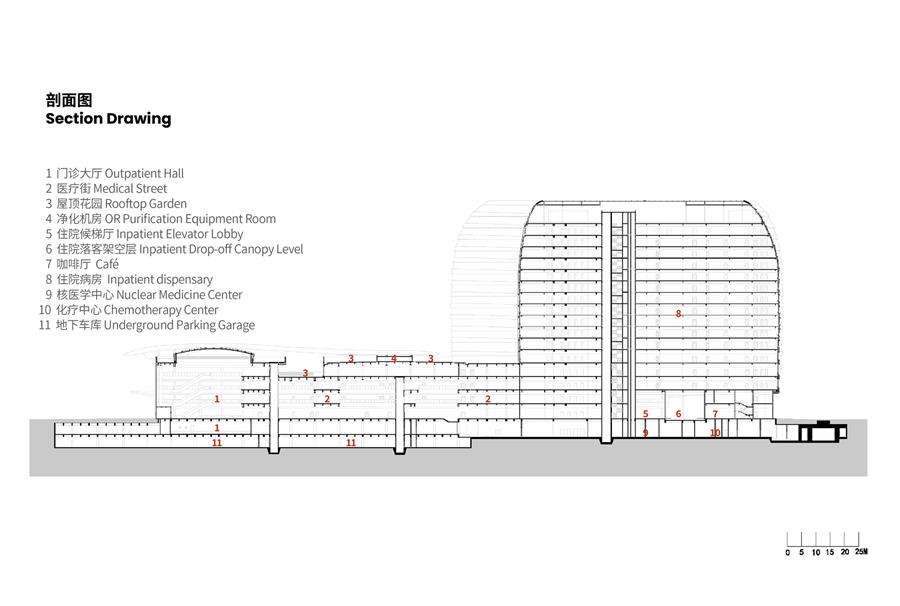 ▲剖面图 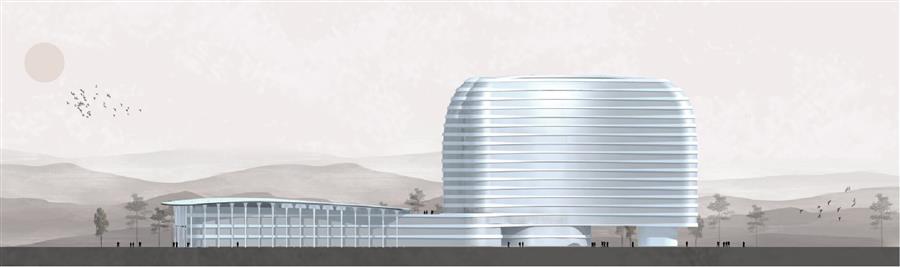 ▲立面图 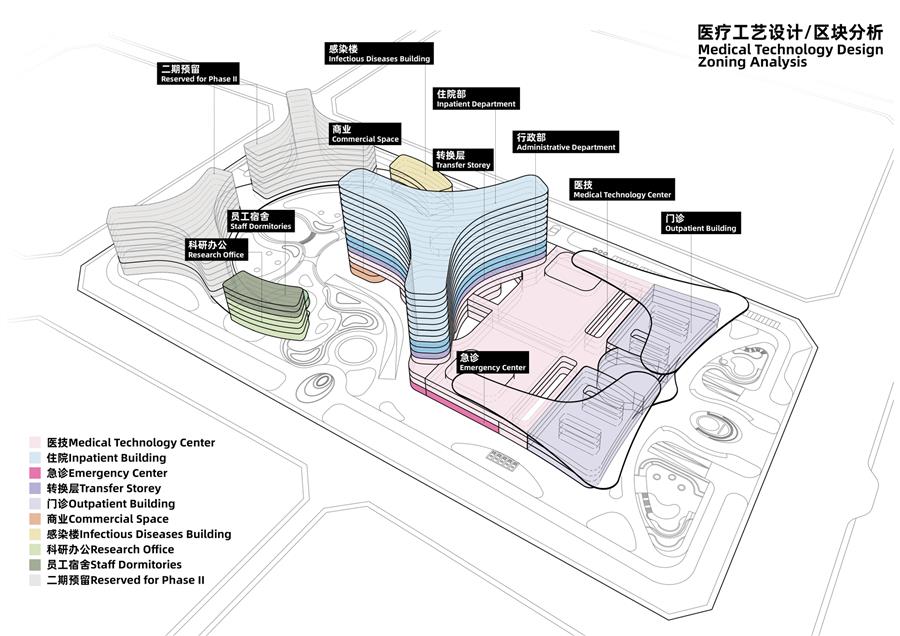 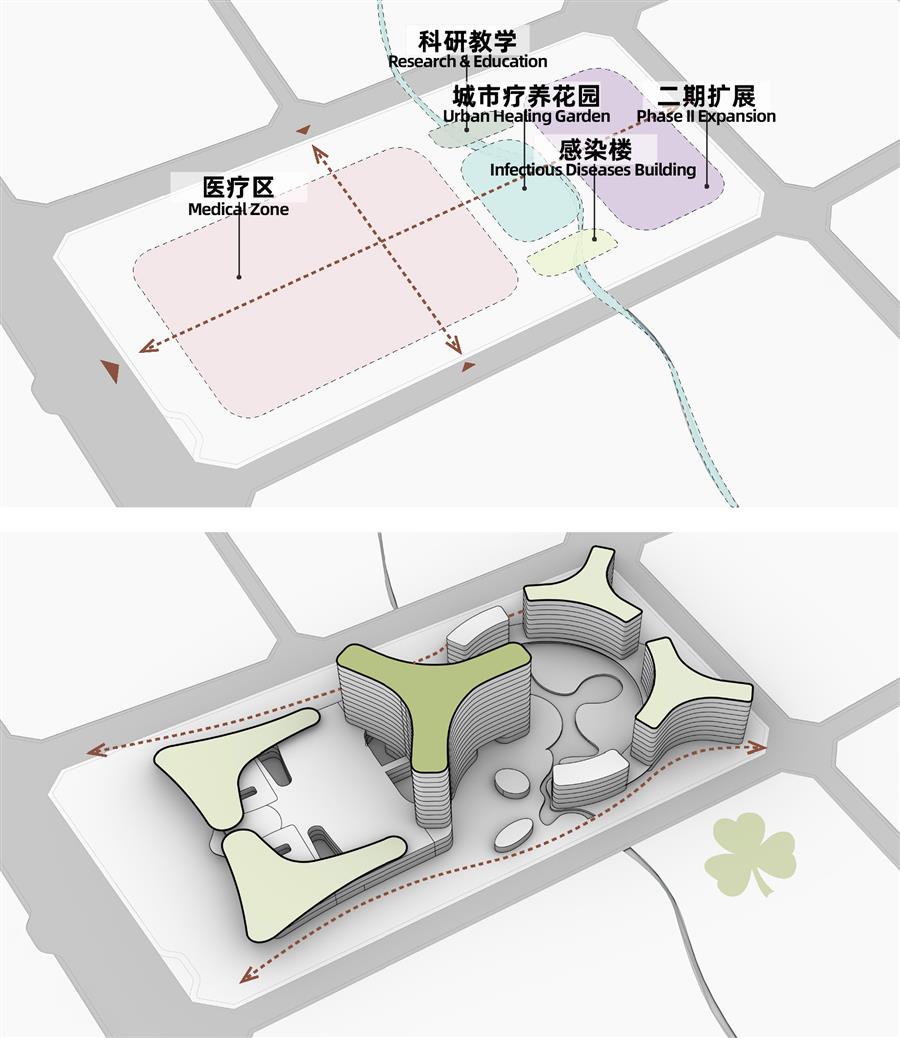 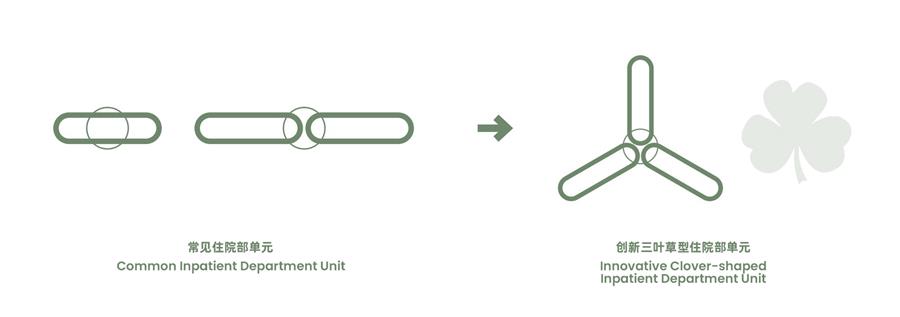 ▲分析图 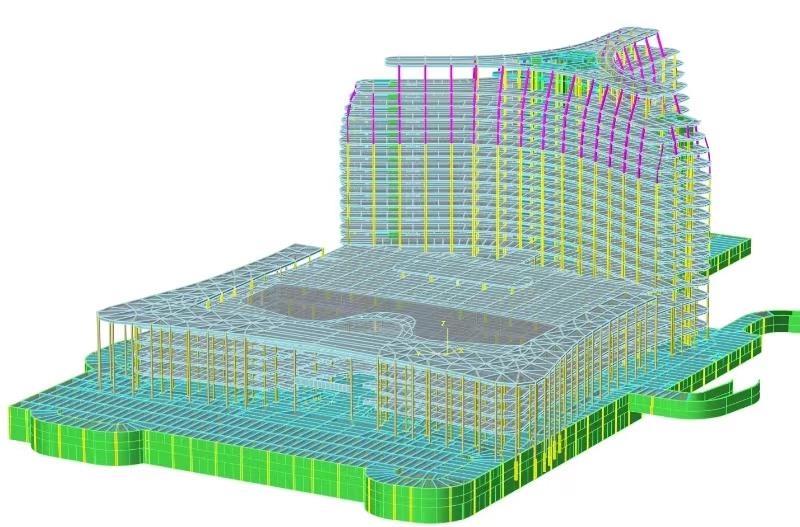 ▲示意图              这一极地文化地标终将落成,成为人类与海洋巨兽相遇的崭新场所。            |
|